
Piano Lessons That Kids Will Stick With
Many parents want their children to learn piano and to stick with it. Here is what actually makes the difference.
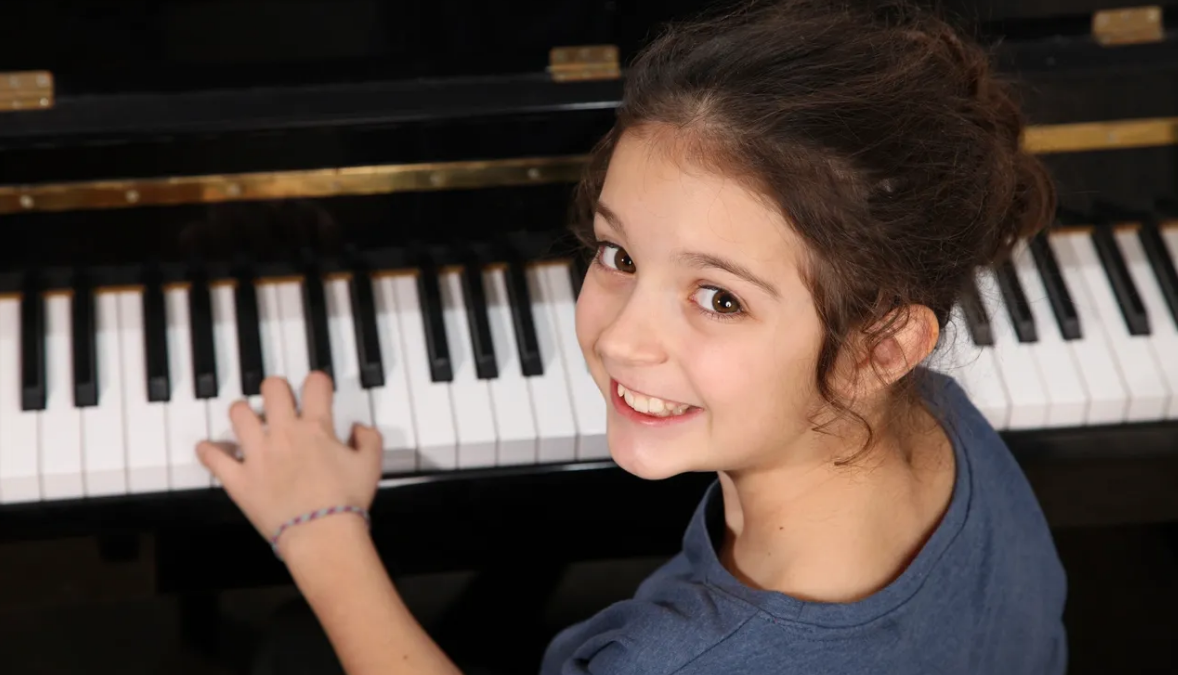
Many parents want their children to learn to play music and to be successful — and they want them to stick with it. Even if you haven't had lessons yourself, you may be aware of the intellectual, psychological, emotional, sociological and spiritual benefits that learning to play music promotes and you want this for your child.
But music lessons are costly in more ways than one. The cost of a quality instrument, lesson fees over many years that add up to thousands of dollars, and there is also the time and energy involved in taking children to lessons and supervising their practice at home. If they don't practice — you're paying a lot for them to practice on their teacher's piano! So what can parents do?
This is actually a multi-faceted issue that requires several points of discussion, but in this article I would like to shine a light on the issue of the method of instruction and highlight the features of the Simply Music program that I use to teach my piano students.
What traditional lessons ask children to do
Traditional piano tuition typically begins with learning to read notation — rhythm and note names. Before a child plays anything that sounds like a song, they learn to read music — to recognise notes on a stave, to count beats, to decode rhythms on a page.
This makes sense as a philosophy if you believe that reading music is the only gateway to playing it. But consider what it actually asks of a six or seven-year-old in practice.
A child sits down at the piano, excited to play. Instead of playing, they are introduced to a new written language — one that has its own symbols, its own grammar, its own logic — and asked to begin translating it into finger movements at the same time. Two complex skills, learned simultaneously, from scratch.
For some children, this clicks. For many, it doesn't — not because they lack ability, but because the cognitive load is genuinely high and the payoff feels distant. Weeks pass before they play anything that sounds like music. Months pass before they play anything they recognise. The gap between what they imagined learning piano would feel like and what it actually feels like becomes hard to bridge.
This is where the motivation begins to drain. And once it drains, it's hard to restore.
The other side of the equation
It's worth being honest here: the method is not the only thing that determines whether a child continues with piano.
Every long-term pursuit — a sport, learning a language, a craft — goes through phases where a child doesn't want to show up. That's not a sign that they've chosen the wrong thing. It's a sign that they're in it for the long haul, and the long haul has hard stretches.
Simply Music is clear about this, and I agree. A great method is one part of the picture. A skilled teacher is another. And the third — the leg of the tripod that parents sometimes underestimate — is an engaged, supportive adult at home.
A parent who helps establish a practice routine, protects that time in a busy family schedule, and stays alongside their child when motivation drops is not just a passenger in their child's musical journey. They are part of what makes it work.
Knowing this upfront is what keeps parents going in the long run.
What Simply Music does differently
The Simply Music method begins not with notation, but with music.
From the very first lesson, students play real pieces. Not exercises or fragments — complete pieces, with a beginning, a middle, and an end. Pieces that sound like something. Pieces they can play for someone.
This is possible because Simply Music separates two things that traditional methods try to teach simultaneously: the ability to play, and the ability to read. Simply Music teaches playing first. Students connect to their natural musicality and develop a direct physical relationship with the instrument — before they encounter written notation. The reading comes later, once a solid repertoire of 30–40 pieces is established.
The repertoire students build is broad from the start. Classical pieces sit alongside Contemporary songs, Blues patterns, and Jazz-influenced arrangements. Some students write their own compositions. They learn accompaniments to songs they already know. The variety isn't incidental — it's the point. A child who plays across multiple styles doesn't just have more pieces. They have a richer, more flexible musical understanding.
A typical student who practises five days a week — just 15 to 20 minutes a day — and makes use of their home learning materials can learn 30 to 50 complete pieces in a year of weekly lessons. That's not a target. That's what students achieve when the method gives them genuine, immediate access to music and they have the support at home to use it.
Why children engage more deeply with this approach
When a child plays a complete piece in their first lesson, something shifts. They came to piano wanting to make music, and they made music. The experience matches the expectation.
That match matters more than it might seem. It creates a foundation of confidence — a sense of "I can do this" — that carries a child through the harder stretches that come later. It gives them something to show their family, something to feel proud of, something to return to on the days when the new material feels difficult.
The Simply Music method also suits a wide range of learning styles. Very few children learn only through reading music. It really is only one way of sourcing information about music. A playing-based method opens more doors, for more children, than one that requires notation as the entry point. It also gives all students a direct relationship with the instrument.
What this looks like at Easy Keys Music
At Easy Keys Music, I use Simply Music to teach piano to all ages, including children and teens, through shared lessons both online and locally in Mosman Park.
Shared lessons — small groups of two or three students — add a social dimension that individual lessons can't replicate. Children hear each other play. They are inspired by what a slightly more experienced student can do. They share the experience of learning, which makes the harder moments easier and the achievements more satisfying. This connection is also what keeps children going longer term. It is especially motivating to keep up with practice as you will be playing in front of a group and not just your teacher. Shared lessons make it easier for children to stay motivated.
The combination of the Simply Music method, a teacher who knows how to deliver it, and parents who understand their role in the process is what produces students who don't just start piano — but keep going.
If you'd like to find out more, I hold free information sessions online and in person throughout the year. They're an opportunity to see the Simply Music approach in action, ask questions, and get a clear picture of what lessons at Easy Keys Music involve — before committing to anything.
Find out more and register for a free information session at www.easykeysmusic.com
Explore Topics
Written by
Easy Keys Music
Content creator and writer sharing insights and stories.


