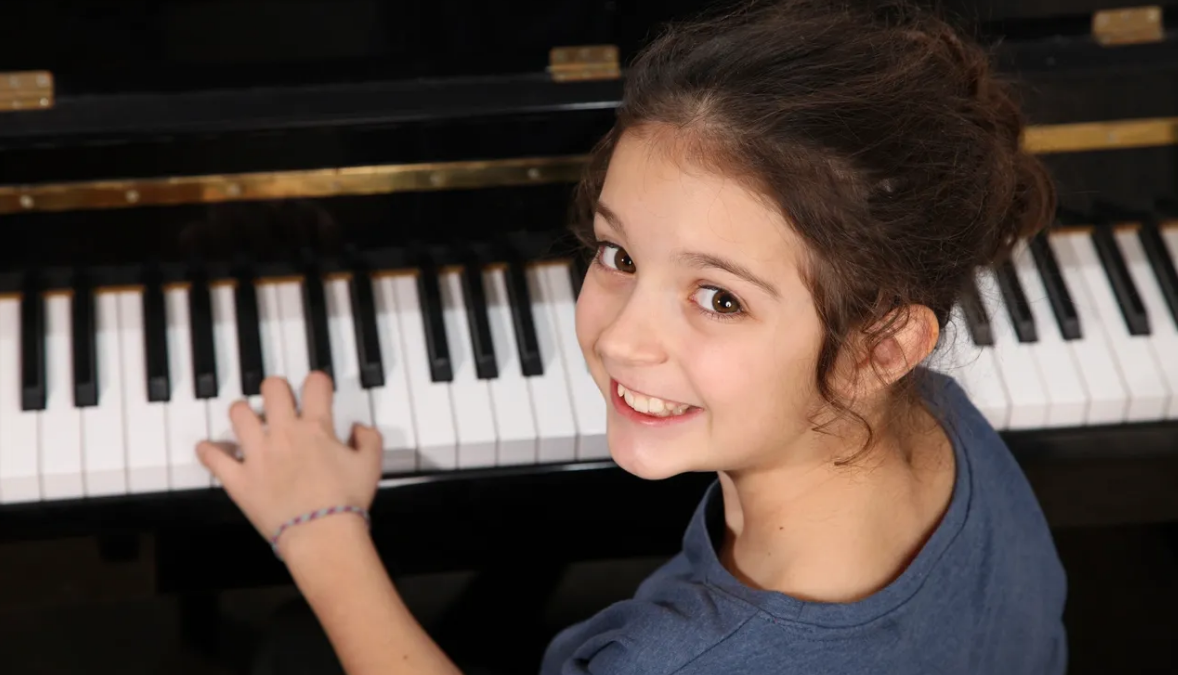
Why Your Brain Is Begging You to Learn Piano — Especially After 40
The neuroscience of learning piano as an adult — and why the brain you have right now is more than ready.

There's a moment that happens in almost every adult piano lesson. A student — perhaps someone who has spent decades raising a family, building a career, or both — sits down at the keys for the first time and plays something that actually sounds like music. Not scales. Not exercises. A real piece. Their eyes widen slightly. They look up and say some version of the same thing: "I didn't know I could do that."
That moment isn't just emotionally satisfying. It turns out it's also exceptionally good for your brain.
The science of learning something new as an adult
For a long time, it was widely believed that the brain's capacity to grow and adapt was largely reserved for childhood. We now know that's not true. Neuroscientists have established that the adult brain retains a remarkable ability to form new neural connections throughout life — a property called neuroplasticity.
Learning a musical instrument is one of the most powerful neuroplasticity triggers we know of. Playing piano engages both hemispheres of the brain simultaneously — the logical left hemisphere processes rhythm, structure, and timing, while the creative right hemisphere handles melody, expression, and emotion. Few other activities ask so much of the brain all at once.
A landmark study from the University of Toronto found that adults who took music lessons showed measurable improvements in memory, attention, and processing speed. These benefits weren't reserved for young students — adults of all ages showed meaningful gains. In fact, some researchers suggest that because adult learners bring more life experience and richer emotional context to music, the neurological engagement may be even deeper.
Protecting the brain you have — and building a better one
Brain health becomes an increasingly personal topic as we move through our forties, fifties, and beyond. Most of us have watched a parent or grandparent experience cognitive decline, and quietly wonder what we can do to protect ourselves.
The evidence for music as a form of cognitive protection is genuinely encouraging. Regular musical activity has been associated with:
- Stronger working memory — the ability to hold and manipulate information in the moment
- Improved executive function — planning, problem-solving, and mental flexibility
- Greater processing speed — how quickly the brain retrieves and responds to information
- Reduced risk of cognitive decline — several long-term studies suggest that musicians experience dementia-related symptoms later, and less severely, than non-musicians
This doesn't mean playing piano is a cure or guarantee. But it is a meaningful, enjoyable, evidence-backed way to keep your brain engaged and challenged.
You don't have to read music to get these benefits
One of the most common misconceptions about learning piano as an adult is that you need to master music notation before you can really play. The Simply Music method — the approach used at Easy Keys Music — turns that assumption on its head entirely.
Simply Music is a playing-based programme that prioritises building a broad repertoire of real, satisfying pieces from the very first lesson. Students learn to play music from a range of styles — classical, popular, blues, and more — before tackling the skill of reading notation.
This approach has a significant neurological advantage. When you're playing actual music from the beginning, the brain's reward pathways activate almost immediately. You're not slogging through months of theory before you hear anything that sounds like a song. You're playing one from lesson one — and that sense of genuine achievement keeps the brain engaged, curious, and motivated to continue.
A student story: finding a new kind of musical freedom
One of our adult students came to Easy Keys Music with an extensive background in traditional piano lessons. She had spent years learning to read notation and work through graded repertoire. She was a competent, disciplined player — but she felt stuck. She could read music well, but improvising, accompanying a friend, or playing by ear felt completely out of reach.
Since beginning lessons with the Simply Music approach, she has discovered an entirely different relationship with the piano. She's learning to play accompaniment patterns, exploring improvisation, and — in her own words — "loving the freedom of this approach." Her brain is learning new pathways, new ways of listening and responding to music, that decades of traditional lessons had never opened up.
It's a wonderful reminder that it's never too late to learn something new — even about an instrument you've already spent years playing.
The right time to start is now
If you've been putting off learning piano — waiting until life is less busy, until the kids leave home, until retirement — here's the honest truth: the brain you have right now is entirely capable of learning to play. In many ways, the focused attention and life experience you bring as an adult make you a more engaged and rewarding student than any child could be.
At Easy Keys Music, our daytime lessons are designed specifically for adults — working from home, recently retired, or somewhere in between. You'll learn on your own piano, from the comfort of your own home, in an environment where there's no rush, no embarrassment, and no pressure to be anything other than a curious adult who wants to play.
Your brain is ready. The piano is waiting.
Ready to take the first step? Get in touch with Easy Keys Music to find out more about our online daytime lessons for adults.
Explore Topics
Written by
Easy Keys Music
Content creator and writer sharing insights and stories.